
Basement Water Damage in Shawnee, KS
Basement water damage is water that enters a basement from rain, groundwater, a failed sump pump, or a plumbing leak, and soaks floors, walls, and belongings. Basement water damage in Shawnee, KS most often comes from heavy rain and sump pump failure, and it is an emergency because the water keeps working into floors, walls, and stored belongings. We help homeowners across Shawnee, Kansas remove the water, dry the space, and clean up afterward.
Basement Flooded? What to Do Right Now
Not sure what to do when your basement floods? Work through three steps: make the space safe, find the source, and protect what you can. A flooded basement is an emergency because water keeps spreading.
Stay Out Until the Power Is Safe
Is it safe to go into a flooded basement? Not until the power is dealt with. If the water is high enough to reach outlets, the electrical panel, the furnace, or the water heater, stay upstairs, because standing water can conduct electricity. Do not wade in, and have the power shut off by your utility or an electrician if the panel sits in the wet area. Watch the stairs too, since wet steps are slippery.
Find Where the Water Is Coming From
The source decides the fix. Water that rose after rain points to groundwater or a sump pump problem, while water from a pipe, water heater, or washing machine points to a leak, and a burst pipe needs the supply shut off right away. Water that smells like sewage, or that rose from a floor drain, should be treated as sewage, which needs sewage cleanup and not ordinary water removal.
Protect Belongings and Document the Damage
Lift valuables, boxes, and electronics to higher ground, but avoid carrying wet items through the rest of the house, since that spreads moisture and contamination. Photograph the water, the damage, and your belongings before moving anything, since a record of the loss helps with a homeowners insurance claim.
Why Basements in Shawnee Flood
Heavy Rain and Saturated Ground
Why does my basement flood when it rains? When the soil around the foundation becomes saturated, water presses against the walls and finds its way through floor seams, cracks, and window wells. Flash flooding can push water into window wells and low basements in a short time, and a basement flooded after heavy rain in Shawnee usually means saturated ground or a pump that could not keep up. Basement flooding cleanup in Shawnee often follows intense storms, and water that spreads beyond the basement becomes flood and storm damage cleanup.
Sump Pump Failure
When a sump pump stopped working and the basement flooded, the usual causes are age, a clogged sump pit, a stuck float, or a power cut during a storm, which is exactly when the pump is needed most. Sump pump failure cleanup in Shawnee starts with removing the water the pump should have handled.
Leaks Below Ground Level
Not every basement flood comes from outside. A leaking water heater, a split supply line, or a washing machine hose can release a lot of water in a short span, and in a basement it collects with nowhere to drain.
Sewer Backups During Storms
In heavy storms, stormwater can overload sewer systems, and sewage can back up through the lowest drain in the house, usually the one in the basement. Johnson County Wastewater, which operates the county's sewer system, has a Backup Prevention Program that Johnson County homeowners dealing with basement sewer backups can ask about.
How a Flooded Basement Is Cleaned Up and Dried
Flooded basement cleanup in Shawnee moves through five stages, and the order matters, because a basement cannot dry until the water is out and cannot be called finished until the readings say it is dry. Skipping a stage is a common reason a basement stays musty.
Removing the Water
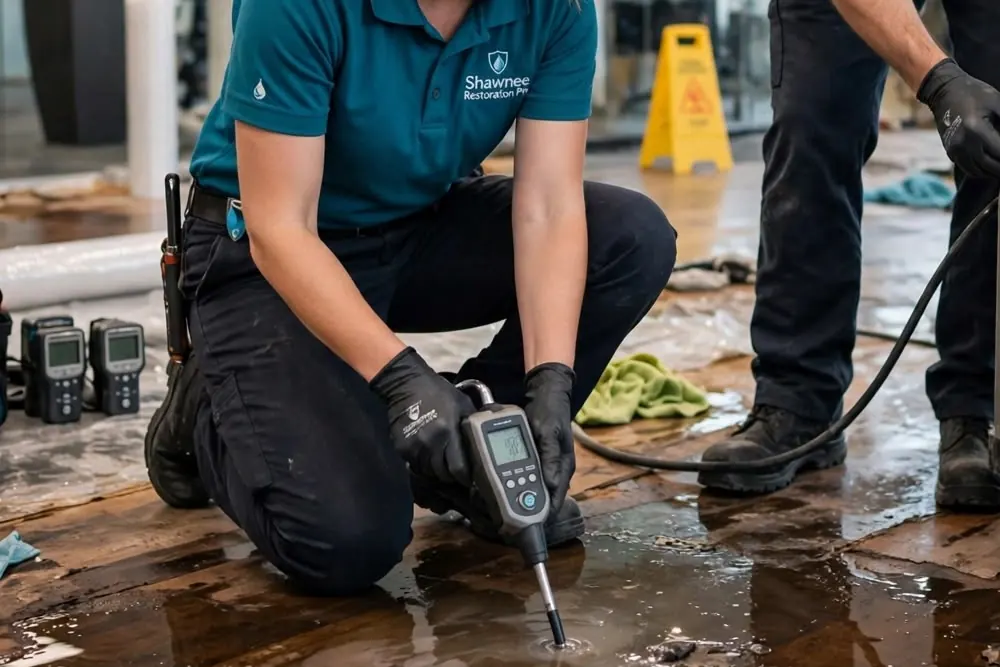
Basement water removal in Shawnee starts by pumping out the pooled water and then extracting what is left on floors, using the same water extraction and removal method that applies in any room of the home. Getting the water out early limits damp odors and keeps moisture from climbing into the walls. Basement water can be deep, so how it is pumped out depends on the depth and the layout of the space.
Sorting What Can Be Dried From What Cannot
Not everything wet can be saved. Soaked carpet padding is often replaced, firm drywall can sometimes be dried while soft or swollen drywall usually cannot, and wet insulation often has to go. Wet carpet and drywall in a basement are judged by how long they stayed wet and what type of water reached them, which is why results cannot be promised until they have been seen.
Drying Walls, Floors, and Concrete
After the water is out, walls, floors, and concrete still hold moisture, and concrete releases it slowly. Airflow and dehumidification dry these surfaces, as in structural drying and dehumidification, and because a basement stays damp longer than upstairs rooms, a musty smell after a basement flood can linger until the drying is finished. Drywall and framing are checked too, because water wicks upward from the floor.
Cleaning and Sanitizing
Cleaning and sanitizing a basement are matched to the category of water and the materials it reached. Water from a broken supply line and water from a sewer backup need very different handling, and contaminated water calls for added care on every surface it touched. Hard surfaces and stored items are cleaned, and anything that contaminated water reached is sanitized.
Checking Moisture Before the Job Closes
Moisture readings are taken again once drying is underway and at the end, and the job is closed out only when the materials read dry. That check matters most in a basement, where hidden dampness invites odors and mold if it is left behind.
Finished and Unfinished Basements: What Changes
A finished basement flooded by water has more to lose: drywall, carpet and padding, trim, built-in cabinets, and furniture all absorb water, and walls can hide moisture behind the finish. An unfinished basement has concrete, exposed framing, and stored belongings, which dry more simply, although boxes and stored items soak up water readily. The steps are the same in both: remove the water, dry the space, clean, and confirm drying. The materials, and therefore the work and the risks, differ, and knowing which kind of basement you have helps scope the job. Finished basements often hide moisture longer, so they are checked more carefully before the space is used again.
What Affects the Cost and Time to Restore a Flooded Basement
Basement jobs vary widely. Cost and time depend on water depth, the size of the area, whether the basement is finished or unfinished, the type of water, and the length of time it has been wet. A deep flood across a finished area takes more work than a shallow spill on bare concrete, while contaminated water adds extra steps. We do not publish prices, since each basement has to be assessed first. When a claim is likely, check what your homeowners policy covers for sewer backup and for water from outside, since policies differ.
Basement Water Damage in Shawnee, KS
Our basement water damage cleanup in Shawnee, KS handles residential basement water damage across the city, and that coverage reaches homes in ZIP codes 66203 and 66218 within Johnson County. The same steps apply whether the water is a few inches deep or covers the whole lower level. If you are unsure your address is covered, ask when you reach us.
10124 W 59th TerraceShawnee, KS 66203
Reach Us for Basement Water Removal in Shawnee
Reach Us Now for Basement Flooding
If your basement is flooding, get in touch right away for emergency basement water removal in Shawnee and tell us what you see. You can count on an IICRC certified, licensed and insured team that is available 24/7, and that is ready to work with your insurance company.
What to Tell Us About Your Basement
Tell us how deep the water is, where it came from, whether the power is on, whether sewage could be involved, how much time has passed since the flooding began, and whether the basement is finished. If you can do it from the top of the stairs without entering the water, photos of the flooding help.