
Sewage Cleanup in Shawnee, KS
Sewage cleanup removes contaminated wastewater from a home, sanitizes what it touched, and treats the odor, because sewage is black water that can carry harmful bacteria. Our sewage backup cleanup in Shawnee, KS is built around safety first: in an emergency, keep people and pets away from the water and from the affected rooms until it has been dealt with. We serve homeowners across Shawnee, Kansas whose toilets, drains, or sewer lines have backed up into the home.
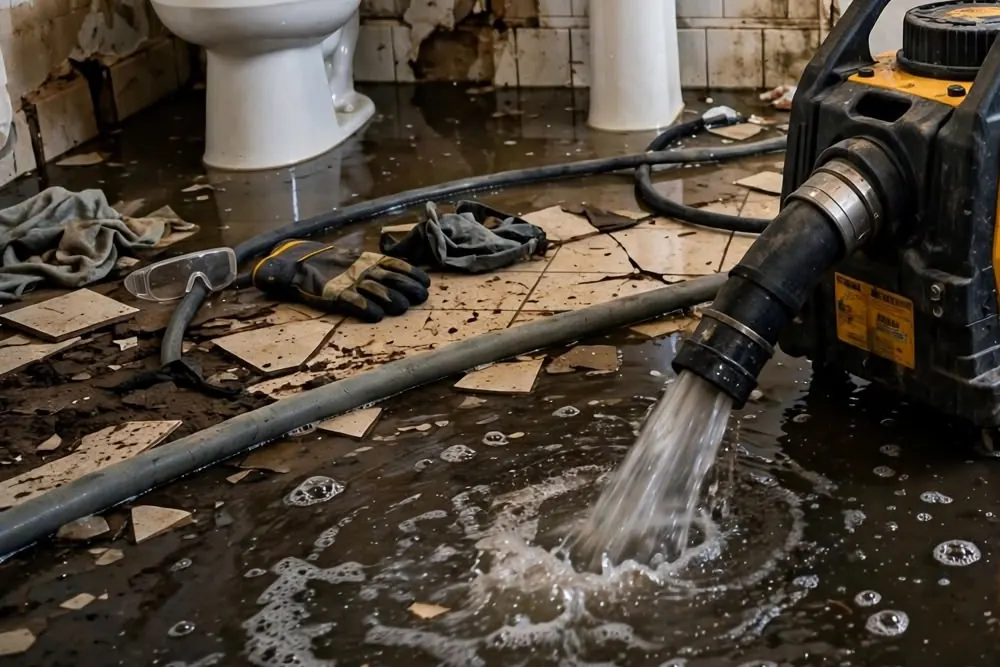
Sewage Backup in Your Home? Safety Steps Right Now
Wondering what to do after a sewage backup at home? Protect people first, stop adding water, and document what happened. A sewage backup is an emergency for health reasons as well as property reasons, so these steps come before any cleanup.
Keep People and Pets Away
Keep children, pets, and anyone with a weak immune system out of the affected area, because sewage can carry bacteria, viruses, and parasites. Avoid all contact with the water, do not walk through it, and keep shoes and clothing that touched it away from the rest of the house.
Stop Using Water and Plumbing
Do not flush toilets, run sinks, or use the washing machine or dishwasher, since every gallon you add can push more sewage into the home. If sewage is coming up a floor drain or a toilet, the line is blocked or overloaded, and using water only makes the backup worse.
Photograph the Damage and Protect Belongings
From a safe distance, photograph the backup, the affected rooms, and any belongings it reached, so a homeowners insurance claim has evidence behind it. Move dry items out of the area only if you can do so without touching the water. A sewage backup in a basement often shows up first at the lowest drain, and the same steps apply as for basement water damage.
Why Sewage Is Dangerous
Is a sewage backup dangerous? Yes, because untreated wastewater carries organisms that can make people sick, and it contaminates everything it touches. That is why sewage is never handled like an ordinary water leak.
What Makes Sewage Black Water
Sewage is Category 3 water, also called black water, which means it is heavily contaminated. It can carry harmful bacteria, viruses, and other pathogens such as parasites, and drying does not make it safe, so black water cleanup in Shawnee treats every affected surface as contaminated.
Materials That Absorb Sewage
Porous materials soak up sewage like a sponge. Carpet and padding, drywall, insulation, and upholstery can hold contamination deep inside, which is why they are judged differently from hard surfaces, and no outcome can be promised before they are seen. Once sewage has soaked into a porous material, surface cleaning cannot reach it.
Why Floodwater Is Treated the Same Way
Floodwater from outside can be contaminated by runoff and overflowing sewers too, so it gets the same precautions. When a storm is the source, flood and storm damage cleanup applies the same rules for contaminated water.
What Causes Sewage Backups in Shawnee
Clogged or Damaged Sewer Lines
A sewer line can clog with grease, tree roots, or debris, or it can break and collapse, and when water has nowhere to go it comes back up through the lowest opening in the house. Toilet overflow cleanup in Shawnee can begin with this kind of blockage in the line, not the toilet itself.
Heavy Rain Overloading the Sewer System
Johnson County Wastewater operates the county's sewer system, and in a heavy storm, stormwater and groundwater can get into the sanitary sewers by way of cracks and improper connections, which can exceed capacity and cause overflows. A sewer backup during heavy rain shows up first at the lowest drain, and sewer backup cleanup in Shawnee often follows these storms. Homeowners dealing with this can ask Johnson County Wastewater about its Backup Prevention Program.
Toilet, Drain, and Appliance Overflows
Not every sewage problem starts in the main line. A blocked toilet or drain can overflow into a bathroom, laundry room, or basement, and an appliance that drains into a clogged line can add to it. A toilet overflowing with sewage may mean a local clog or a blockage further down the line.
How Sewage Cleanup Works, Step by Step
Sewage cleanup in Shawnee, KS follows a strict order, because the first job is to stop contamination from spreading into clean areas. Each stage depends on the one before it.
Containing the Affected Area
The area is isolated first so contamination does not travel on shoes, equipment, or air movement into clean rooms. Anyone working in it wears protective gear, foot traffic is limited to what the work requires, and the work is planned so that nothing contaminated is tracked into clean areas.
Removing Contaminated Water and Waste
Contaminated water and waste are pumped out and extracted using water extraction and removal, with extra precautions so nothing spills into clean areas. Standing sewage and wet debris come out first, followed by what remains on floors, and the aim is to take out as much as possible before it soaks deeper into floors and walls.
Deciding What Can Be Cleaned and What Must Go
Hard, nonporous surfaces such as tile, concrete, and sealed wood can usually be cleaned and sanitized. Porous materials that sewage has soaked into, including carpet padding, drywall, and insulation, generally cannot be safely cleaned and are usually removed, so which materials stay depends on the water category and the spread of the contamination, and no result can be promised in advance.
Cleaning, Sanitizing, and Treating Odor
Surfaces that can stay are cleaned thoroughly and then sanitized, including hard surfaces, fixtures, and stored items that can be saved, and odor is treated at the source instead of masked. A sewage smell after a backup usually means contamination is still present in a porous material or a hidden space, so odor control follows the cleaning, not the other way around.
Drying and Checking Moisture
Once the contamination is gone, the space still has to dry, which is where structural drying and dehumidification deals with the moisture still held in walls, floors, and subfloors. In a basement, concrete holds moisture, so this stage needs patience, and readings, not appearances, decide when it is finished. Moisture readings are taken until drying is confirmed, because damp, previously contaminated areas invite odors and mold.
Can You Clean Up a Sewage Backup Yourself?
Can you clean up sewage yourself? Usually not. A small, contained toilet overflow may be handled with protective gear such as gloves, boots, and eye protection, but any backup that reaches carpet, drywall, or a basement needs professional cleanup. Porous materials absorb sewage, the contamination is not always visible, and the odor and health risk can remain if cleanup is incomplete. Even a small overflow can contaminate grout, baseboards, and flooring seams that are easy to miss, and mixing household cleaners can release dangerous fumes. So who cleans up a sewage backup? A professional restoration company with the training and protective equipment to do it safely.
What Affects the Cost and Time of Sewage Cleanup
Every backup is different. Cost and time depend on how much sewage there is, how large the affected area is, which materials it reached, how long the sewage has been sitting, and where it came from. A small overflow on tile is a different job than sewage that has soaked carpet and drywall across a basement, and contaminated water adds steps because everything it touched has to be treated. Pricing is not shown on this page, because each situation has to be assessed first.
Does Insurance Cover a Sewage Backup?
Does homeowners insurance cover sewer backup in Kansas? Often not by default. Many standard homeowners policies exclude sewer and drain backup unless a sewer backup coverage add-on is purchased, so check your policy or ask your agent. Coverage for sewer backup differs from coverage for flood or burst pipes, so ask which applies. Photos and notes about the damage help whichever way coverage goes, and working with your insurance company is part of what we do.
Sewage Cleanup in Shawnee, KS
Our residential sewage cleanup serves Shawnee, Kansas, including homes in ZIP codes 66216 and 66226 across Johnson County. Sewage can reach one bathroom or an entire lower level, and the same safety steps apply to both. Wondering whether your street is covered? Ask when you reach us, since coverage can be confirmed with your street name and ZIP code.
Reach Us for Sewage Cleanup in Shawnee
Reach Us Now for Sewage Cleanup
For emergency sewage cleanup in Shawnee, get in touch right away, and keep everyone out of the affected area in the meantime. Your cleanup team is IICRC certified, licensed, and insured, with 24/7 availability, and we work with your insurance company.
What to Tell Us About the Backup
Tell us where the sewage came up, how far it has spread, whether it is still happening, which materials are affected, and how long the problem has been going on. Photos help, but only from a safe distance and without touching anything.