
Water Extraction & Removal in Shawnee, KS
Water extraction is the process of removing standing water, and the water held in carpet and padding, so the building can start to dry. Our water extraction in Shawnee, KS handles the water left behind by heavy rain, sump pump failure, a water heater leak, a burst or frozen pipe, or an appliance that overflowed. For emergency water removal in Shawnee, Kansas, reach us as soon as you see water, because it keeps soaking into floors and walls.
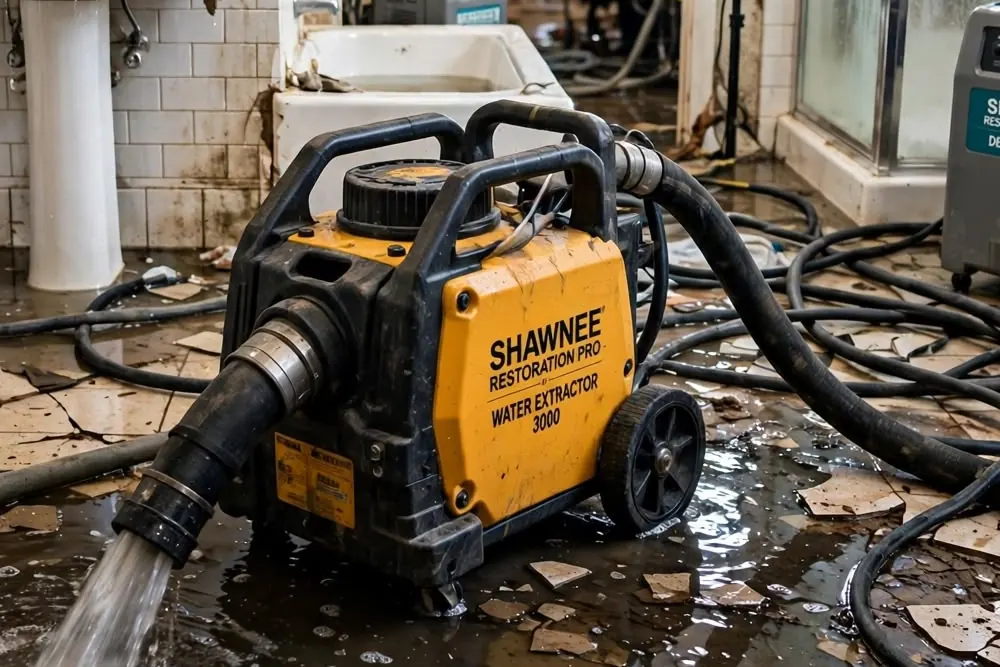
Standing Water in Your Shawnee Home: What to Do Right Now
If you are wondering what to do about standing water in your house, three things come first: avoid electrical hazards, stop the source, and get the water out before it spreads. Around Shawnee, standing water most often traces back to a pipe that froze and thawed, a failed sump pump, an overflowing appliance, or heavy rain. Standing water is an emergency because it keeps spreading.
Keep Clear of Electrical Hazards
Standing water near outlets, cords, or appliances can carry an electrical hazard, so keep out of that room. If the breaker panel is dry and easy to reach, switch off power to the wet area, but if reaching it means stepping into water, leave it alone. A household vacuum should not be used on standing water, and slick floors call for careful steps.
Find and Stop the Source
Turn off the supply valve for the affected fixture, or the main shutoff if the fixture has no valve of its own. If a burst pipe or a split supply line is behind the water, stopping it comes before any cleanup, because water that keeps coming in undoes every other step.
Act Before the Water Spreads
Water does not stay where it lands. It moves under baseboards into carpet, padding, floors, and the lower part of walls, and each added hour pushes it deeper. When heavy rain has reached more than one room, the situation moves into flood and storm damage cleanup, which needs a wider plan.
How Water Extraction Works, Step by Step
How to remove standing water from a house comes down to two stages: the water is pumped out and extracted first, and the structure is dried afterward. Here is how each stage works.
Removing Standing Water
Standing water removal in Shawnee begins with pumping the main volume out of each affected room, which stops the spread and limits the odor and humidity that build up in the home. Water in a lower level after heavy rain or sump pump failure follows the same steps, with extra attention to basement water damage concerns such as finished walls and floor drains.
Extracting Water From Carpet and Padding
Wet carpet water extraction removes water from the fibers and, just as important, from the padding beneath, where most of it collects. This wet carpet and padding extraction is why towels and fans alone fall short when you are figuring out how to get water out of carpet. Whether wet carpet can be saved after water damage turns on the water type and how long it stayed wet, so no one can promise an outcome before seeing it.
Removing Water From Hard Floors
On wet floors, water removal from floors depends on the material: hardwood can cup, laminate can swell at the seams, and tile can hide water in the grout and the subfloor below. Because each reacts differently, the water needs to come out early.
Finding Water in Walls
Water in walls is easy to miss. It soaks into drywall and fills wall cavities from the bottom up, so a wall can look normal while the inside stays wet, and checking behind baseboards is part of finding it. After a burst pipe, water in walls can travel well beyond the room where the pipe failed.
Checking Moisture and Handing Off to Drying
After the visible water is out, a moisture check shows what remains wet, and the moisture still in walls, floors, and subfloors is handled by structural drying and dehumidification, with moisture levels monitored until drying is confirmed.
Clean, Gray, or Black Water: Why the Type Matters
The type of water changes the job. Category 1 means clean water, such as the flow from a failed supply line, and it poses the least risk. Category 2 is gray water, for example discharge from a dishwasher or washing machine, and it may carry contaminants. Category 3, or black water, is heavily contaminated, and it covers sewage as well as some kinds of flooding that come in from outside. Water that starts clean can turn contaminated while it sits, so extraction should start early. Keep out of contaminated water and let professionals handle the cleanup. Black water needs sewage cleanup, not ordinary extraction.
What Affects the Cost and Time of Water Extraction
No two extraction jobs are alike. Time and cost depend on how deep and widespread the water is, what type of water it is, how easily the area can be reached, and how long it has been standing. A shallow spill takes less work than deep water across a large area, and contaminated water adds steps. Crowded rooms and narrow spaces can slow the work, and finished floors can add time too. We do not publish prices, because each job has to be assessed before it can be scoped.
Water Extraction in Shawnee, KS
Our residential water extraction covers homes across Shawnee, Kansas, including those in ZIP codes 66216 and 66218, part of Johnson County. A single wet room and a flooded level both follow the same extraction steps. Not sure your home is in range? Share your nearest cross streets and we will check.
Reach Us for Water Removal in Shawnee
Reach Us Now for Water Removal
For emergency help with standing water in Shawnee, reach us now and describe what you see. We are IICRC certified, licensed and insured, and available 24/7, and our team works with your insurance company.
What to Tell Us About the Water
Describe where the water is, whether the source has been shut off, how long it has been standing, and whether the water could include sewage. If it is safe to do so, photos of the wet areas help us plan the job.