
Flood & Storm Damage Cleanup in Shawnee, KS
Flood and storm damage cleanup removes floodwater, mud, and silt from a home, dries the structure, and cleans everything the water reached. Flood damage cleanup in Shawnee, KS is most often needed after heavy rain and flash flooding. Treat it as an emergency, because contaminated water keeps soaking into floors, walls, and belongings. Our team gets the water out of Shawnee, Kansas homes safely and begins the drying that follows.
Flooded House? What to Do Right Now
What to do after a flood in your house starts with safety. If your house flooded after a storm, the first steps are the same whatever the cause: stay out of the water, stay away from electricity, and wait until the home is safe to enter. A flooded house is an emergency.
Stay Out of Floodwater and Away From Electricity
Floodwater can carry raw sewage and other hazardous substances, and the EPA advises limiting direct contact with it. Is it safe to stay in a flooded house? Not while water is present, because standing water near outlets, cords, and appliances creates electrical hazards, so stay out and leave the power and gas to professionals if you cannot shut them off safely. If you lose power, run a generator only outdoors and well away from doors and windows, since its exhaust contains deadly carbon monoxide.
Wait Until the Home Is Safe to Enter
Do not go back in until it is safe. Check for official evacuation or safety notices first, and make sure roads are passable, because floodwater can hide washed-out pavement. When you do return, look for structural concerns such as sagging ceilings, shifted floors, or cracked walls, and turn back if anything looks unstable.
Photograph the Damage and Start Removing Water
Once it is safe, record the flooding and the damage with photos, and photograph valuables before they are moved, because a clear record matters for any claim. Then start getting the water out, which is what water extraction and removal is for, because water left sitting keeps soaking into the structure.
Why Floodwater Is Contaminated
Is floodwater contaminated? Yes, so treat it as contaminated until you know otherwise, because it picks up whatever it passes through.
What Floodwater Can Carry
Floodwater can carry sewage, chemicals, bacteria, and debris from streets, yards, and storm drains, which is why it is classified as Category 3, the most heavily contaminated water category. When sewers overflow into a home, the work becomes sewage cleanup, and the same precautions apply.
Why Storm Water Still Needs Care
Rain that comes in through a roof or window may be cleaner at first, but it becomes contaminated as it soaks into insulation, carpet, and building materials and sits there. The longer it stays, the more care it needs, so storm water is not safe to ignore just because it fell from the sky.
Materials That Cannot Be Safely Cleaned
Porous materials such as carpet and padding, drywall, and insulation soak up contaminated water and are generally discarded, while hard, nonporous surfaces are usually cleaned and sanitized in place. Public health agencies advise removing drywall and insulation that flood or sewage water has contaminated, though which materials stay is decided case by case, and nobody can promise a result before seeing the materials.
How Flooding Happens in Shawnee
Flash Flooding and Heavy Rain
A June 2021 storm showed how severe flooding here can get: the National Weather Service in Pleasant Hill put most of Johnson County under a flash flood warning, and the northwest corner, around Shawnee and De Soto, took the worst of it, with gauges at Johnson Drive, K-7, and Mill Creek passing five inches in about two days. Flash flood cleanup in Shawnee, Kansas often begins after storms like this.
Storm Runoff and the Kansas River
The city's stormwater system sends runoff through catch basins and storm drain pipes to the Kansas River. When a storm delivers more water than those drains can handle, it can pool in yards, streets, and low-lying areas and then find its way into homes, which is where heavy rain flooding cleanup in Shawnee often starts.
Storm Water Entering Through Roofs, Windows, and Window Wells
Not all storm water rises from the ground. Wind-driven rain can enter through damaged roofs, loose windows, and overflowing window wells, and it often settles in lower levels. Storm water damage cleanup in Shawnee covers the water that gets inside either way, and flooded lower levels bring the same concerns as basement water damage.
How Flood and Storm Damage Cleanup Works
Flood water removal in Shawnee follows a fixed order, and it answers the question of how to clean up after a flood: safety and contamination decide every step that comes after.
Making the Home Safe to Enter
Before any cleanup starts, the home is checked for hazards: electricity, gas, structural damage, and contaminated water. Anyone working in floodwater wears protective gear, including rubber boots, gloves, and goggles, as public health guidance recommends, and the work area is planned so that contamination is not carried into clean rooms. Generators, pressure washers, and other fuel-burning tools stay outdoors, because their exhaust is deadly indoors.
Removing Floodwater, Mud, and Silt
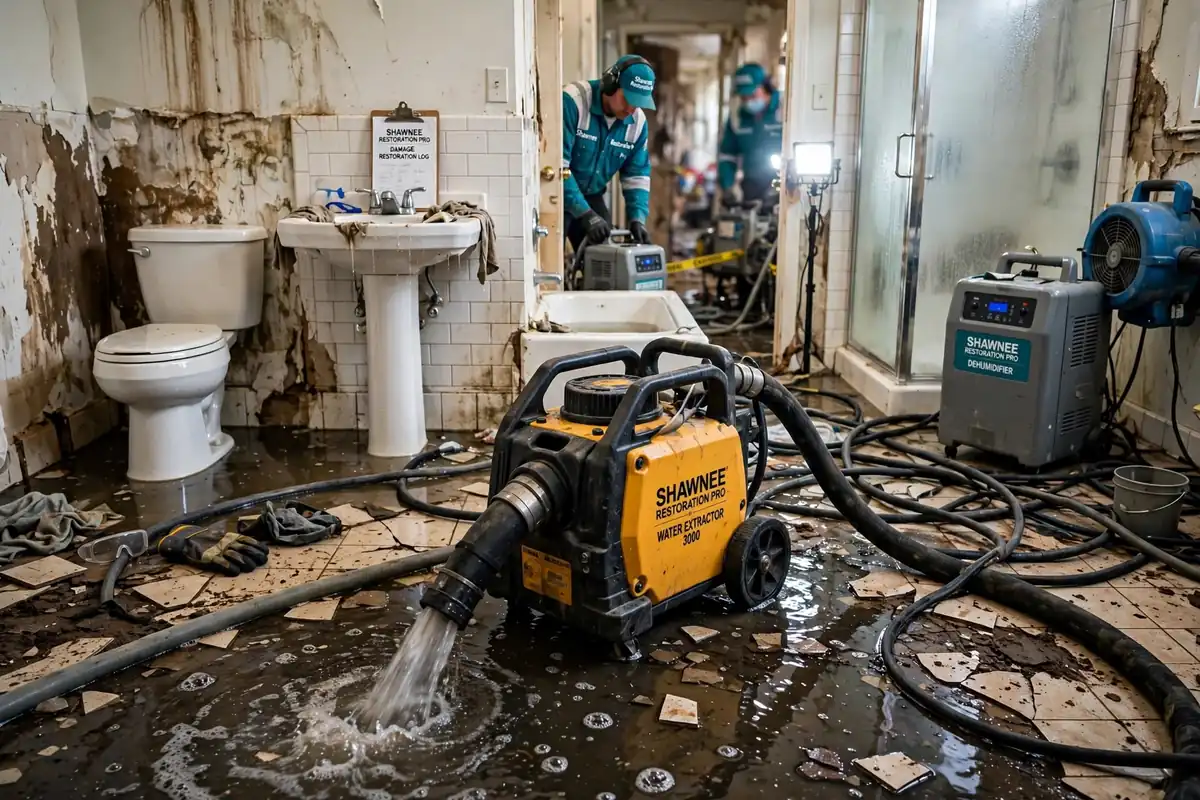
Floodwater is pumped out first, the water held in carpet and padding is extracted too, and then the mud and silt it left behind are removed. Mud and silt cleanup after a flood matters because silt holds moisture and contamination against floors and walls. Floodwater in the house cleanup also means clearing debris, so that surfaces can be reached for cleaning and drying.
Sorting What Can Be Saved
Hard, nonporous materials and many belongings can be cleaned, but porous items such as carpet padding, upholstered furniture, and soaked drywall often cannot be made safe again. Items are sorted into those that can be cleaned, those that need a closer look, and those that must be discarded. Photos of items are taken before disposal so that a claim has a record, and which items can be saved is decided case by case, with no outcome promised in advance.
Cleaning and Sanitizing
The method for cleaning and sanitizing follows the category of water and the materials it reached. Surfaces that touched floodwater are cleaned first and then sanitized, with added care for every area that contaminated water reached.
Drying and Confirming Dry
A flooded structure holds a great deal of moisture, so structural drying and dehumidification follows the cleanup, using airflow and dehumidification to dry walls, floors, and subfloors. Readings continue until drying is confirmed, since damp, previously flooded materials invite odors and mold. In a flooded lower level, concrete and framing hold moisture longest, so drying there takes the most care.
Flood Damage vs. Storm Damage: What Is the Difference?
Flood damage is water rising in from outside, such as a flash flood, runoff, or an overflowing creek. Storm damage is wind and rain getting in through the roof or windows. The two overlap, and both need water removal and drying, which is the core of flood damage restoration in Shawnee, KS. One storm often causes both, with runoff flooding a lower level while wind-driven rain soaks an upper floor. Roof and window repairs are separate trades, so once the water is removed and the structure is dry, a roofer or window contractor handles the opening that let the rain in.
Does Insurance Cover Flood Damage?
Does homeowners insurance cover flood damage? Standard homeowners policies generally exclude flood, which is covered by a separate flood insurance policy, so check whether you have one. Rain that enters through a storm-damaged roof or window may be treated differently, depending on the policy language, so ask your agent which category your loss falls into. Photos taken before cleanup help whichever way it goes, and so do receipts for cleanup. Your insurance company is one we work with.
What Affects the Cost and Time of Flood Cleanup
Flood jobs vary more than almost any other water damage. The cost of flood cleanup and the time it needs depend on how deep the water was and how much area it covered, how contaminated it is, how long it sat, which materials it reached, how many levels are affected, and how easy the home is to access. Heavy silt and debris add time too. Deep, contaminated water across several levels takes far more work than a shallow, contained flood. Prices are not shown here, as each flood has to be assessed first.
Flood and Storm Damage Cleanup in Shawnee, KS
Our residential flood and storm damage cleanup serves homes across Shawnee, Kansas, in Johnson County, including the 66218 and 66226 ZIP codes. A flooded room and a flooded level follow the same safety steps, and both flood damage and storm damage are covered by this service. Unsure about your address? Share your street and ZIP code when you reach us.
Reach Us for Flood Water Removal in Shawnee
Reach Us Now After a Flood or Storm
After a flood or storm, contact us right away for emergency flood water removal in Shawnee, and stay out of the water until it is safe. The crew you reach holds IICRC certification, carries a license and insurance, and is available 24/7. Your insurance company is one we work with.
What to Tell Us About the Flooding
Tell us how much water there is, where it came from, which levels of the house are affected, whether the electricity is still on, whether sewage may be involved, and whether it is safe to enter. Photos help only when they can be taken from dry ground.